
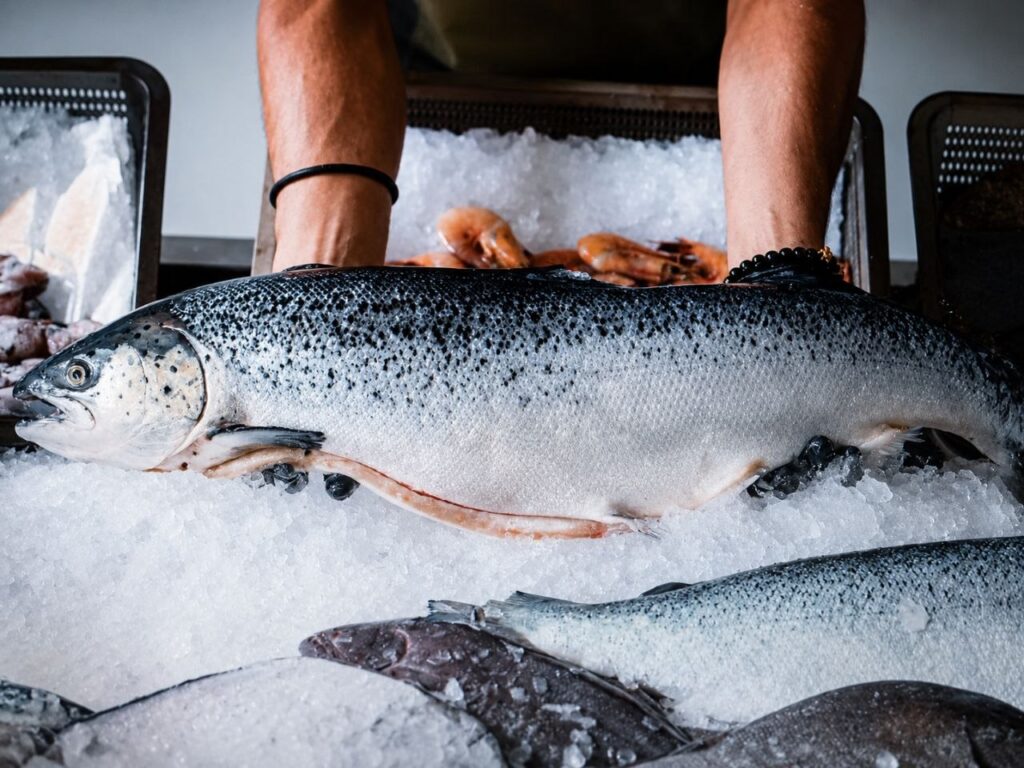
The Atlantic salmon fish (Salmo salar) is one of the most famous and respected fish species in the world. Known for its pink flesh, strong swimming ability, and long migration journeys, this fish plays a major role in both nature and human fishing activities.
It is highly valued in salmon fishing, commercial seafood markets, and ecological studies due to its unique life cycle and sensitivity to environmental changes.
What Is Atlantic Salmon?
Atlantic salmon belongs to the Salmonidae family, which also includes trout and char species. It is a powerful migratory fish that moves between freshwater rivers and the Atlantic Ocean during different stages of its life.
Anglers consider it one of the most exciting fish species because it fights strongly when caught, making it a top target in salmon fishing worldwide.
Scientific Classification
Common Name: Atlantic Salmon
Scientific Name: Salmo salar
Family: Salmonidae
Type: Migratory fish
Geographic Distribution
Atlantic salmon lives in the North Atlantic region, including:
Iceland
Norway
United Kingdom
Canada
United States (northeast rivers)
Portugal (southern limit in Europe)
Baltic Sea and North Sea
This salmon fish depends on clean rivers that connect to the ocean for reproduction and early life stages.
Physical Characteristics
Atlantic salmon has a long, streamlined body designed for swimming long distances in both rivers and oceans.
Key features include:
Silver body color in ocean phase
Small adipose fin near the tail
Strong muscular body
Color changes during breeding season
Average size:
48–50 cm in many regions
Can exceed 1 meter in rare cases
Weight: several kilograms
Life Cycle of Atlantic Salmon
The life cycle of Atlantic salmon is one of the most interesting in the fish world.
Freshwater stage
Eggs are laid in river gravel beds. After hatching, young salmon stay in freshwater and grow slowly.
Migration to ocean
Once strong enough, juvenile salmon migrate to the ocean where food is abundant.
Ocean growth phase
In the sea, salmon grow quickly by feeding on small fish and crustaceans.
Return migration
After reaching maturity, they return to the same river where they were born to reproduce.
This return instinct is called homing behavior, and it is one of the most unique traits in fish species.
Reproduction Process
Spawning usually happens in autumn and early winter.
Females dig nests in gravel riverbeds
Eggs are deposited and fertilized
Incubation lasts 13–19 weeks
Young fish remain in freshwater before migration
Feeding Habits
Atlantic salmon diet depends on life stage:
In rivers:
Insects
Larvae
In oceans:
Small fish
Shrimp
Crustaceans
Marine larvae
This rich diet helps salmon grow fast during ocean migration.
Salmon Fishing
Salmon fishing is a popular sport and commercial activity.
Anglers use:
Rod and reel
Artificial lures
Natural bait
Fishing usually happens in:
Rivers
Estuaries
Coastal areas
Atlantic salmon is highly valued because:
It fights strongly
It is rare in many areas
It requires skill to catch
This makes it one of the most prestigious fish in sport fishing.
Atlantic Salmon vs Pink Salmon Fish
Many people confuse Atlantic salmon with pink salmon fish.
Atlantic Salmon:
Larger size
Lives in Atlantic Ocean
Longer life cycle
Pink Salmon:
Smaller size
Mostly Pacific species
Shorter life cycle
Both are edible but different species.
Nutritional Benefits
Many people view Atlantic salmon as one of the best fish for health.
It contains:
Omega-3 fatty acids
High-quality protein
Vitamin D
Healthy fats
Benefits include:
Heart health support
Brain function improvement
Anti-inflammatory properties
Threats and Conservation
Atlantic salmon populations face several threats:
Water pollution
Dams blocking migration
Climate change
Overfishing
Habitat destruction
These issues reduce natural salmon populations in many regions.
Conservation Efforts
To protect Atlantic salmon, scientists and organizations work on:
Restoring river habitats
Building fish passages
Monitoring wild populations
Regulating fishing activity
These efforts aim to keep salmon fishing sustainable for the future.
Interesting Facts
Atlantic salmon can travel thousands of kilometers
They return to their birth river with high accuracy
Some can live up to 8 years
They change color during spawning season
They are one of the most studied fish species
FAQ
What is Atlantic salmon fish?
A migratory fish that lives in both rivers and the Atlantic Ocean.
Why is salmon fishing popular?
Because Atlantic salmon is strong, rare, and challenging to catch.
Is Atlantic salmon healthy?
Yes, it is loaded with omega-3 fatty acids and protein.
What is the difference between Atlantic salmon and pink salmon?
They are different species with different sizes and habitats.
Conclusion
The Atlantic salmon fish is a remarkable species with a complex life cycle, strong ecological importance, and high economic value. From salmon fishing to nutrition and conservation, it remains one of the most important fish in the world.
Protecting this species ensures that future generations can continue to benefit from its ecological and commercial importance.
Written by atlanticfishingmorocco.com
